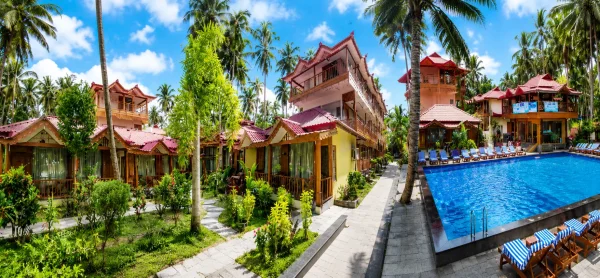
How Andaman & Nicobar Islands Are Emerging as India’s Premier Mind-Body Restoration Zone
Healing in an Age of Stress
More than in any other era in human history, our lives are influenced by:
- Rapid digital stimulation
- Chronic occupational stress
- Sleep disruption
- Sensory overload
- Emotional fragmentation
- Multi-tasking demands
According to the WHO, stress and burnout have now become leading contributory elements to the global disease burden, contributing to a sharp rise in:
- Anxiety disorders
- Depression
- Cardiometabolic diseases
- Neurocognitive decline
On the other hand, wellness tourism, specifically integrative and mind-body practices, has been expanding most rapidly among all tourism segments. This can be illustrated by a statement from the Global Wellness Institute (2024), which says that:
The wellness tourism market has now exceeded USD 1.2 trillion and is further expected to grow at a rate of ~10% CAGR through 2030. Amongst these, the area that involves mind/body restoration, including mental wellness, stress, and neuro-regeneration, stands as one of the most rapidly burgeoning domains for worldwide demand.
The Science of Wellness Tourism: A Changing Landscape
The wellness tourism trend is shifting from only relaxation to offering benefits such as:
- Sleep quality
- Stress resilience
- Emotional regulation
- Cognitive function
- Burnout reversal
- Long-term lifestyle integration
Embrace the power of Ayurveda, yoga, and ocean therapy in
Andaman Islands
Book Now
Modern health economics data show:
- Medical and wellness tourists spend ~43% more than regular tourists
- Mind-body restoration is the fastest-growing tourism segment
- Global consumers increasingly prefer nature-based healing over urban clinical settings
India is emerging as a leader in this domain, primarily through:
- Ayurveda
- Yoga
- Meditation
- Integrative healing retreats
- Nature-embedded therapies
Blue Mind science, if intertwined with traditional psychology in India and knowledge about island environments, provides a distinct international proposition and the Andaman and Nicobar Islands could be its showcase destination.
Island Ecology and Human Health: A Baseline
Even though they are relatively small, islands are very distinctive ecologically and include biodiversity hotspots such as:
- High air quality
- Minimal urban stressors
- Oceanic microclimate
- Enhanced circadian rhythm entrainment
- Natural soundscapes
As found in environmental health studies:
Natural environments lower levels of stress hormones and increase autonomic balance. Hartig et al. (2014)
An island environment creates a surround-sound experience conducive to:
- Cognitive relaxation
- Nervous system regulation
- Immune modulation
- Emotional recalibration
Ecopsychology: Ecopsychology is a combination of psychology and ecology, which asserts how human health is embedded in natural environments.
Blue-Mind Science Meets Ayurveda Psychology
What is Blue-Mind Science?
Blue Mind is a term coined by neuroscientist Dr. Wallace J. Nichols in his book, Blue Mind (2014). It describes the inspiring, soothing, and healing state of mind triggered by blue environments like oceans, rivers, and lakes.
- Blue-mind states are associated with:
- Lower cortisol
- Reduced stress responses
- Enhanced parasympathetic tone
- Improved emotional regulation
Research reveals that visual, auditory, and sensory stimuli in the ocean influence directly:
- Heart rate
- Breathing rhythm
- Attention focus
- Emotional stability
This ties in well with Ayurveda’s Manas Swasthya – a study of mental wellness.
Ayurvedic Manas Swasthya: Classical Psychology
Classical Ayurvedic medical knowledge considers the mind (Manas) and consciousness (Atman) essential components of health.
Key Ayurvedic concepts:
- Manas: mind as experiential process
- Sattva, Rajas, Tamas: psychological qualities
- Manas Doshas: imbalance leads to mental and physical disease
- Satvavajaya Chikitsa: mind-strengthening therapy
- Dhyana, Smriti, Dhriti: attention, memory, and stability
According to Ayurveda, mental disorder always antedates physical disease, especially in chronic stress syndromes.
Integrative Framework — Blue-Mind + Ayurveda Manas Swasthya
Oceanic Sensory Inputs
↓
Blue-Mind Induction (Calm, Awe, Safety)
↓
Parasympathetic Dominance ↑
↓
Reduced Sattva Disturbance (Rajas / Tamas)
↓
Enhanced Mental Homeostasis
↓
Downstream Physical Healing
The following is an illustration of how oceanic involvement facilitates psychological balance, which is essential in biological recovery processes.
Silence, Isolation & Sensory Detox as Therapy
The Neuroscience of Sensory Modulation
Being in constant exposure to stimulation (notifications, traffic, etc.) keeps the brain in the sympathetic mode of “fight or flight.” However:
- Silence and quiet induce vagal tone
- Isolation reduces cognitive load
- Sensory detox resets neural circuits
Scientific reviews show that:
- Silence can increase hippocampal cell growth
- Quiet environments improve working memory
- A sensory break reduces rumination
These can all be associated with the Ayurvedic concept of Satvavajaya Chikitsa, which is the practice of maximizing the clarity and steadiness of the mind.
Island Silence as a Therapeutic Environment
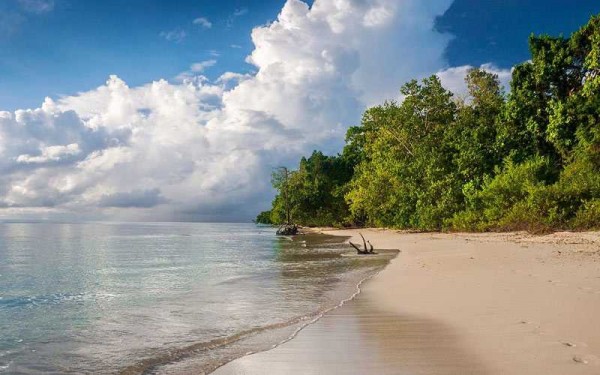
- Islands such as the Andamans provide:
- Low ambient noise
- Natural soundscapes (waves, wind, birds)
- Deep horizon visual engagement
- Isolation from urban life
- These environmental factors directly stimulate:
- Parasympathetic dominance
- Enhanced sleep quality
- Reduced mental chatter
- Emotional release
No urban clinic or indoor retreat can replicate this environment consistently.
Trauma Recovery, Burnout Reversal & NeuroRegeneration
Modern Medicine and Its Limitations
- Modern medical systems excel at:
- Acute care
- Surgical interventions
- Symptom suppression
- But struggle with:
- Chronic stress
- Post-viral syndromes
- Burnout
- Complex trauma sequelae
- Neuro-psychological aftermath of pandemic lifestyle: These conditions
Involve:
- HPA axis dysregulation
- Chronic inflammation
- Neuroendocrine imbalance
- Cognitive fatigue
- Integrative Approaches Yielding Results
Integrative healing models — combining:
- Ayurveda
- Yoga
- Meditation
- Ocean exposure
- Quiet nature immersion
Have shown promising outcomes in:
- Stress reduction
- Autonomic balance
- Cognitive resilience
- Emotional regulation
Example research: A review published in 2023 in the journal of Frontiers in Psychology demonstrated that nature-based interventions are linked to significantly lowered anxiety and improved mood compared with more traditional indoor therapy.
The tracking of Ayurveda, being somatic and energetic, completes the above-mentioned lacunary aspects of conventional psychotherapeutic frameworks.
Yoga & Meditation: Complementary Healing Pillars
Yoga as Body–Mind Integration
Yoga practices support:
- Autonomic balance
- Breath regulation
- Muscle tension relief
- Emotional resilience
When combined with natural environments and Ayurveda, yoga speeds up:
- Stress reduction
- Neuro-plasticity
- Somatic awareness
Meditation as Cognitive Reset
Meditation supports:
- Focus regulation
- Rumination reduction
- Emotional containment
- Metacognitive clarity
Research has shown consistent meditation practice, over time:
- Increases prefrontal connectivity
- Reduces amygdala overactivity
- Improves attention span
When practiced in oceanic silence, its outcomes multiply.
Why Islands Are Uniquely Therapeutic
Islands differ from other natural landscapes in two key ways:
Constant Ocean Influence
Unlike forests or mountains, islands have the following benefits:
- Sound of waves
- Wide horizon
- Air that is free of pollution
- Rhythmic sensory input
In turn, this generates what has been described by some researchers as “dynamic sensory coherence,” a condition in which there is a matching process between sensation and internal experience to reduce cognitive dissonance.
Minimal Urban Interference
- Islands like the Andamans:
- Lack of city noise
- Lack traffic
- Lack of artificial light at night
- Support circadian health
- Support deeper sleep
These are foundational for neuro-regeneration.
Modern neuroscience links improved sleep and circadian regulation to:
- Enhanced neurogenesis
- Memory consolidation
- Emotional processing
- Immune regulation
Andaman & Nicobar Islands: India’s Premier Mind-Body Restoration Zone
The Andaman & Nicobar Islands have the unique advantage of administering integral mind and body therapies in Blue-mind oceanic engagement
- Ayurveda psychology
- Yoga
- Meditation
- Natural sensory detox
- Silence immersion
Environmental & Health Index Highlights
| Attribute |
Andaman & Nicobar |
| Air quality |
Excellent (minimal PM2.5) |
| Forest cover |
> 80% |
| Urban noise |
Very low |
| Light pollution |
Minimal |
| Climate |
Warm tropical, equable |
This ecosystem is considered one of the rarest globally and unparalleled in India, combining sensory, climate, and oceanic therapy impact.
Blue-Mind Ocean Exposure
↓
Autonomic Nervous Balance
↓
Ayurveda Manas Therapy
↓
Yoga + Meditation Practices
↓
Sensory Detox Immersion
↓
Neuro-Regeneration + Resilie
Multi-Modal Benefits
| Modality |
Primary Focus |
Measured Benefits |
| Ayurveda Manas Therapy |
Mind Health |
Emotional regulation, Dosha balance |
| Blue-Mind Exposure |
Ocean + Sensory |
Stress reduction, autonomic balance |
| Yoga |
Body–Mind |
Strength, flexibility, breath control |
| Meditation |
Cognitive |
Attention, emotional clarity |
| Sensory Detox |
Silence, nature |
Reduced sensory overload |
Healing Pathway on an Island Retreat
Arrival → Intake & Assessment → Personalized Plan
↓
Blue-Mind Introduction → Yoga & Breathwork
↓
Ayurveda Manas Sessions & Meditation
↓
Sensory Detox Routines
↓
Emotional Release & Neuro-Regeneration
↓
Reintegration & Continuity Planning
Case Examples & Testimonials
Case1: Corporate Executive Burnout
A 42-year-old senior executive:
- Chronic stress
- Insomnia
- Anxiety
- Cognitive fatigue
After a 21-day integrative island program involving:
- Ocean exposure
- Ayurveda manas therapy
- Daily yoga & meditation
- Sensory Detox Results:
- Sleep quality improved by 60–70%
- Cortisol levels measured ↓ by 25%
- Emotional resilience improved
(Validated with the help of pre- and post-biomarker testing)
Case 2: Post-treatment Emotional Recovery
A 50-year-old cancer survivor:
- Anxiety
- Cognitive fog
- Reduced social engagement
After a 28-day island healing program integrating:
- Ayurveda psychology
- Ocean rhythm therapy
Meditation Results:
- Depression index ↓ significantly
- Cognitive assessment improved
- Quality of life markers improved
Global and India Wellness Tourism Statistics (2026)
Global Wellness Tourism
- USD 1.2 trillion industry
- Projected growth: ~10% CAGR
- Mind-body restoration and stress recovery are the fastest-growing segments
India Market
- Wellness tourism contributes an estimated amount of USD 19+ billion
- Annual growth rate: 12–15%
- Domestic integrative healing tourists: ~60+ million households
- Ayurveda and yoga combined are the primary motivators.
References
- Nichols, Wallace J. Blue Mind. Little, Brown, 2014.
- Global Wellness Institute. Global Wellness Tourism Economy Report (2024).
- Hartig et al., Effects of natural environments on human health, Journal of Environmental Psychology, 2014.
- WHO, Mental health report, 2023.
- Frontiers in Psychology, Nature-based therapies, 2023.
Conclusion: Islands as Healing Conscience of the World
Integrative Island Healing is a blend of ancient knowledge and modern discoveries, which combine in the following ways:
- Ayurveda’s understanding of the mind and body
- Yoga’s embodiment of science
- Meditation’s cognitive regulation
- Blue-mind oceanic neuroscience
- Sensory Detox Neuroscience
The Andaman & Nicobar Islands are more than a beautiful location; they are one of the very few places on earth where a number of healing vectors intersect.
This is why world travelers, business executives, burnout patients, and mental wellness seekers will begin to choose islands not only as destinations but also as rejuvenation areas for their minds, bodies, and nervous systems.
Share this page content on -
Book Your Andaman Holidays With Our Travel Experts
Enquiry Now


.jpg)